7 Legislative Changes Canadian Carriers Need on Their Radar Right Now
The CRA's Driver Inc. crackdown got the headlines. The BC bill that made it far more expensive got none — and it isn't the only one carriers missed.
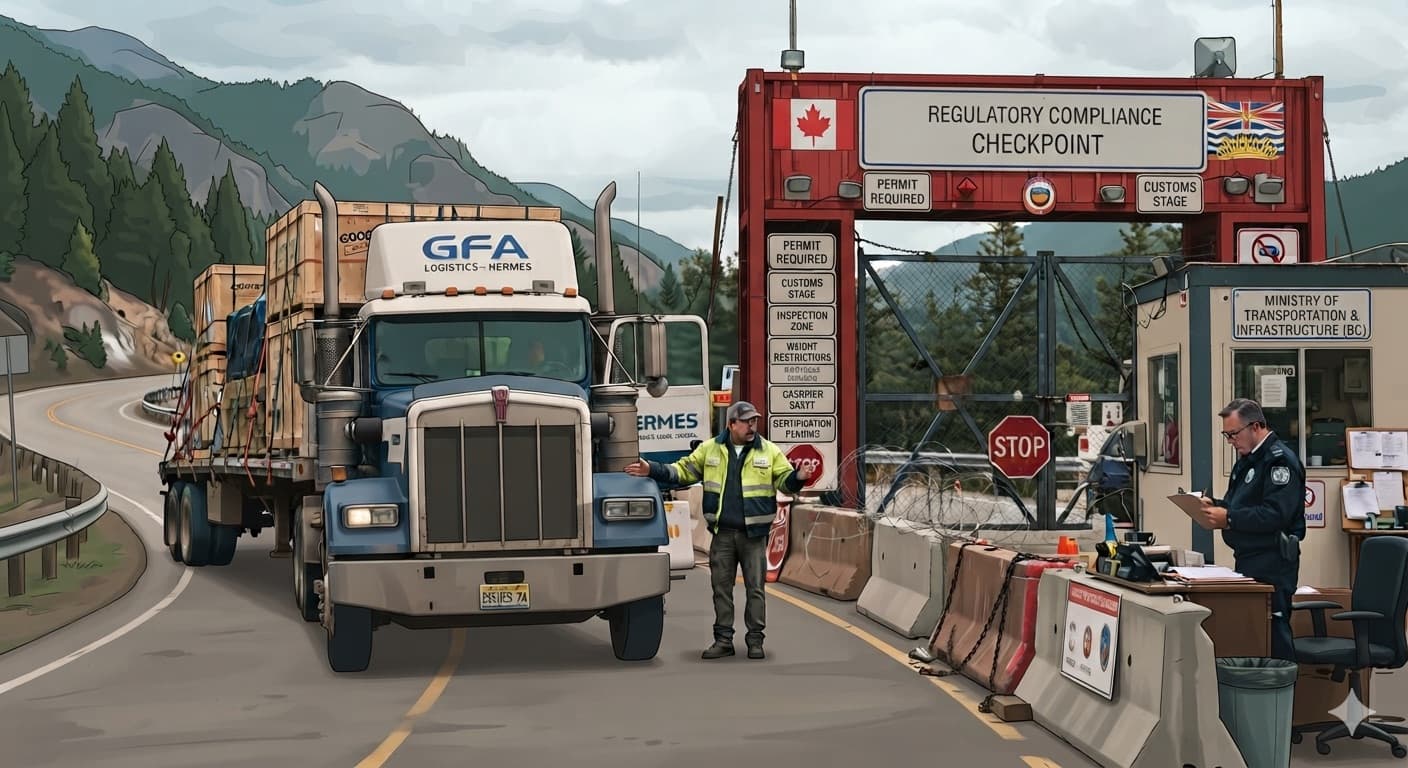
Twelve bills, seven legislatures, six provinces — and every one on its own clock.
On December 4, 2025, the CRA lifted its moratorium on T4A penalties. $100 per missing slip, $30 a day after that, $77 million in enforcement funding behind it — and an ESDC inspection blitz that hit more than 250 carriers in the Hamilton–GTA corridor. Every trucking publication in the country covered it. Carriers who read them had months to get their Driver Inc. exposure in order.
Around the same time, a bill called the Labour Statutes Amendment Act passed into law in British Columbia. Nothing in the title says trucking. What it says is that an employer found owing money to a worker has to deposit the full amount before being allowed to appeal. So if a driver you've been carrying as a contractor gets reclassified, the appeal now starts with a cheque for the entire determination. Same Driver Inc. problem. Second bill. No headline.
That gap is what this list is about. While everyone watched the tax man, legislatures from Ottawa to Victoria to Fredericton moved on dashcams, inspections, fines, and driver training — and one of them moved on the thing carriers were already worried about, from a direction nobody was looking.
Here are seven bills a small carrier should actually be watching — with their real, current status.
A quick decoder first, because legislatures don't speak plain English: Royal Assent means a bill has passed — it's law. Second Reading means it's being actively debated — real momentum, but not law. First Reading means it's only just been introduced — a proposal that may never go anywhere. Eight of the bills below are already law; the rest are still on the conveyor belt, which is exactly why they're worth watching now.
1. BC now requires dashcams in heavy commercial vehicles — this is law
Bill M 217, Dashboard Cameras in Commercial Vehicles Act — Royal Assent, BC (this is law)
BC now requires every commercial vehicle over 11,793 kg GVW to run a compliant dashboard camera — 1080p, night vision, 72 hours of storage. This applies by vehicle weight, not fleet size: a single-truck owner-operator is covered the same as a 200-unit fleet, and drivers can't block or disable it.
The part worth sitting with is the storage requirement. Seventy-two hours of retained footage means that after any incident, a recording exists — whether or not it helps you. Fleets that have run cameras for years already know what that changes about how an incident gets argued. Fleets buying their first one are about to find out.
What to do
Check whether your existing camera meets the specs. "We have a dashcam" and "we have a compliant dashcam" are not the same sentence.
2. Ontario wants daily-staffed scales on Highways 11 and 17
Bill 49, Northern Highway 11 and 17 Safety Act — Second Reading, Ontario (in debate, not law yet)
This bill would staff truck scales on Highways 11 and 17 at least 12 hours a day. Today, running those corridors means a scale you might pass open once a week. Under this bill it's a scale that's open almost every time you go by — on two of the country's most important east–west freight routes.
What to do
Nothing is law yet, but if your CVOR record couldn't survive a doubled inspection rate, that's worth fixing regardless.
3. A traffic conviction that causes serious harm could cost $50,000 and your licence
Bill 47, Fairness for Road Users Act — First Reading, Ontario (a proposal for now)
This bill would create enhanced penalties when any traffic offence causes or contributes to a collision resulting in death or serious bodily harm: fines up to $50,000, up to two years' imprisonment, and licence suspensions up to five years. Note the threshold — it isn't reserved for impaired or dangerous driving. An unsafe lane change that ends badly is inside the net.
For a company driver that's a career. For an owner-operator, a five-year suspension is the business.
What to do
Watch-and-brief. If it moves past committee, it belongs in your next driver safety meeting.
4. Truck driver training schools face mandatory public inspections
Bill 93, Truck Driver Training Schools Accountability Act — First Reading, Ontario (a proposal for now)
Mandatory recurring inspections of driving schools offering Class A training — every six months for schools under five years old, annually for established ones — with results published online. Insurance costs and collision rates track training quality, and right now a resume tells you where someone trained but nothing about whether that school was any good. A public inspection record turns that line on the application into something you can check.
What to do
When hiring new Class A grads, start asking which school — and once inspection results go public, check them.
5. Employment standards fights in BC now require cash up front to appeal
Bill 10, Labour Statutes Amendment Act — Royal Assent, BC (this is law)
This is the bill from the top of this article, and it deserves the full version. An employer found owing money to workers must now deposit the full determination amount before being allowed to appeal. Previously, an employer who disputed a determination could contest it first and pay if they lost. Now the money goes in the door first, and the argument happens afterward.
Put that next to the federal enforcement wave and the arithmetic changes shape. A reclassified driver doesn't just create a CRA problem; it creates a BC labour determination for back wages, holiday pay, and overtime — and appealing that determination means funding it in full while you appeal. The cost of getting Driver Inc. wrong in BC went up on the tax side and the labour side in the same season, and only one of those made the trade press.
What to do
If you engage incorporated drivers in BC, have your classification reviewed now — before a complaint does it for you.
6. Interprovincial trade barriers are actually falling — and carriers are the winners
Federal Bill C-5 (law), Alberta Bill 21 (law), Ontario Bill 2 (law), New Brunswick Bill 14 (law), Nova Scotia Bill 36 (law), Saskatchewan Bill 24 (law)
Not everything is a cost. Six provinces and Ottawa are tearing down internal trade barriers — and every one of these is already law:
- Federal C-5 — removes federal barriers to interprovincial trade and recognizes provincial credentials. Law since June 2025.
- Alberta's Bill 21 — automatically recognizes goods, services, and worker credentials from other provinces. Royal Assent, March 2026.
- Ontario's Bill 2 — does the same for Ontario with reciprocating provinces. Law since August 2026.
- New Brunswick's Bill 14 — the Free Trade Within Canada Act recognizes goods, services, and professional certifications approved in any other province.
- Nova Scotia's Bill 36 — the Free Trade and Mobility within Canada Act does the same, plus lets workers licensed elsewhere work in Nova Scotia without re-qualifying.
- Saskatchewan's Bill 24 — mutual recognition of goods and services approved in other Canadian jurisdictions.
That is not a couple of provinces experimenting. It is a national movement — six provinces and Ottawa, all law, all in the last eighteen months.
What to do
If interprovincial expansion has been on your someday list, re-run the math. All of these are now law, and the barriers you remember may already be gone.
7. Cross-border carriers: the Strong Borders Act is still moving
Bill C-2 — Second Reading, federal (in debate, not law yet)
The omnibus Strong Borders Act tightens Canada–US border enforcement and — buried in its financial provisions — prohibits any business from accepting cash payments of $10,000 or more. If cash over that threshold ever moves through your business, that practice is on its way to being illegal, full stop.
What to do
Get large cash payments into traceable channels now, ahead of the law.
The pattern behind all seven
Count the sources: two federal bills, ten provincial ones across six provinces, and a tax-enforcement campaign that isn't a bill at all — each at a different stage, each on its own clock. And these are the trucking-obvious changes, the ones with "truck" or "highway" in the title. The two that will cost carriers the most money this year — the BC labour bill and the CRA budget line that funded the T4A crackdown — are filed under labour and tax, where no trucking headline will ever flag them.
And those are just bills. Federal regulations published in the Canada Gazette — like the updated Transportation of Dangerous Goods Regulations and new Sulphur in Gasoline requirements that landed this summer — change your compliance obligations without a single reading in Parliament.
Nobody at a 5-truck operation has time to read order papers from seven legislatures, let alone the labour and tax dockets where the expensive surprises actually live. That's how carriers end up learning about a rule from the inspector enforcing it.
This article is general information, not legal or tax advice. Bill statuses are accurate as of September 5, 2026, and bills at First or Second Reading can change substantially before passage. Consult a professional for advice on your situation.